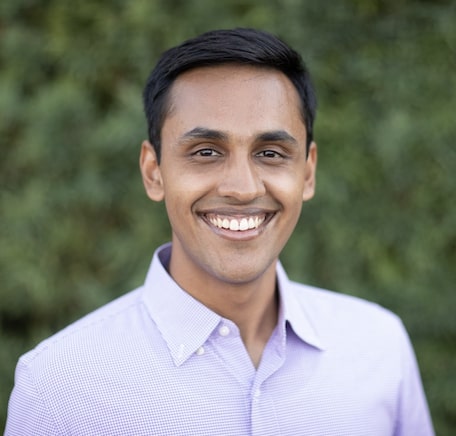
Hi there! 👋 I am a PhD student in Computer Science at Columbia University, co-advised by Carl Vondrick and Richard Zemel. I am broadly interested in developing AI systems that are capable of scientific design and discovery. My research has introduced new ML-based approaches for simulation and lab-in-the-loop experimentation. My doctoral work has been supported by an NSF Graduate Research Fellowship.
Previously, I completed my BSE in Computer Science at Princeton University, with a minor in Applied Mathematics. I had the pleasure of working with Olga Russakovsky in the Princeton Visual AI Lab and Ryan P. Adams.
Outside of research, I am a performing Carnatic (South Indian Classical music) vocalist.
Email / CV / Google Scholar / LinkedIn
Research
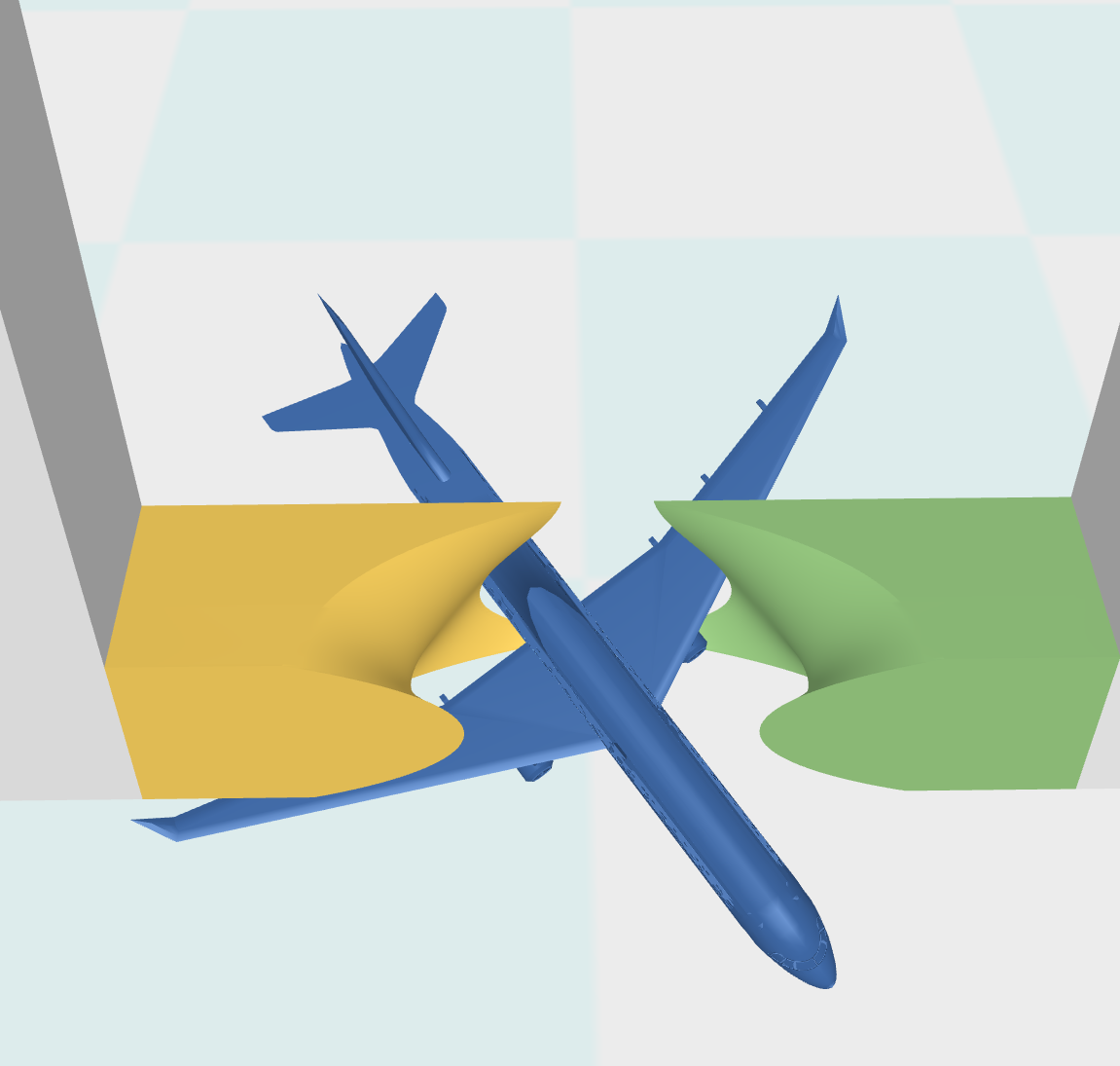
Few-Shot Design Optimization by Exploiting Auxiliary Information
Arjun Mani, Carl Vondrick, Richard Zemel
ICML 2026.
Our work introduces a more realistic problem setting for lab-in-the-loop design optimization, where an experiment returns high-dimensional `auxiliary’ information beyond a scalar reward. We develop a novel method tailored to this setting and demonstrate that it significantly accelerates design optimization across different domains, such as robot hardware design.
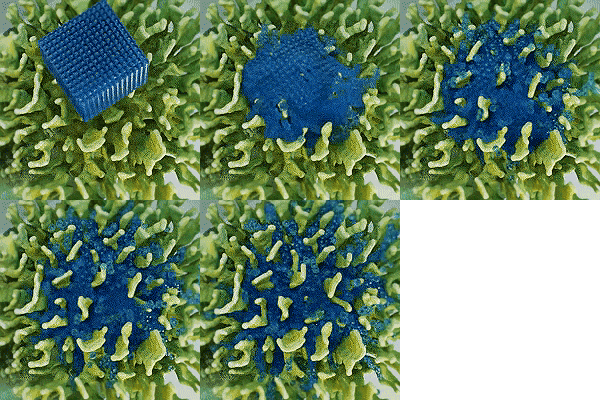
SurfsUp: Learning Fluid Simulation for Novel Surfaces
Arjun Mani*, Ishaan Preetam Chandratreya*, Elliot Creager, Carl Vondrick, Richard Zemel
ICCV 2023.
We introduce a novel approach for ML-based fluid simulation. While learned GNN models for particle-based simulation struggle to scale to large scenes, our method addresses this limitation by modeling solid surfaces using implicit 3D representations. This approach enables more scalable and accurate simulation of fluid–surface interactions, as well as inverse design of solid surfaces.
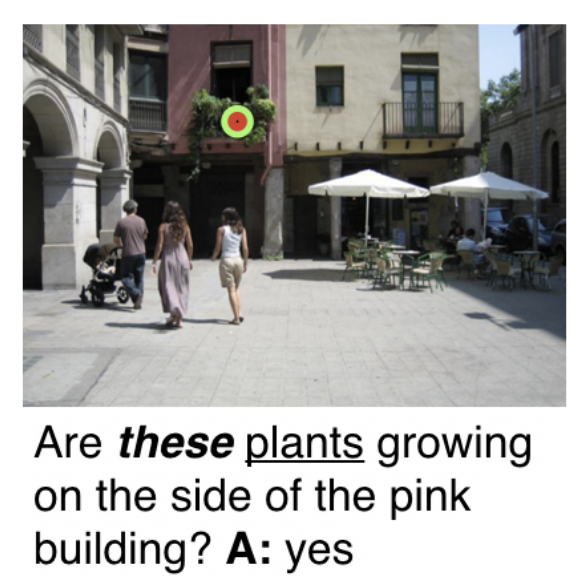
Point and Ask: Incorporating Pointing into Visual Question Answering
Arjun Mani, Will Hinthorn, Nobline Yoo, Olga Russakovsky
VQA Workshop, CVPR 2021 (Poster Spotlight).
We extend Visual Question Answering (VQA) to grounded questions involving pointing gestures and introduce benchmark datasets and model designs for this new question space.
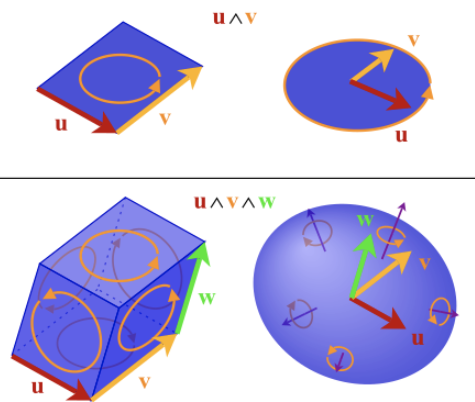
Representing Words in a Geometric Algebra
Arjun Mani, Ryan P. Adams
Best Overall Project, Princeton Program in Applied Mathematics (PACM)
We propose using geometric algebra to embed words as multivectors instead of standard vectors, and demonstrate greater expressivity in word similarity and analogy-solving with this representation.
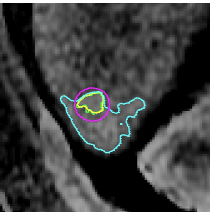
IEEE Transactions on Medical Imaging, vol. 36, no. 3, March 2017
Assaf Hoogi, Arjun Subramaniam*, Rishi Veerapaneni*, Daniel Rubin
We develop a deep learning-aided approach for medical image segmentation, which achieves significant improvement compared to previous state-of-the-art methods on MRI and CT lesion datasets.
Teaching and Service
TA for "Frontiers of Machine Learning" at Columbia University, Prof. Carl Vondrick (Fall 2025).
Seminar class covering frontier research areas in ML (AI agents, post-training, diffusion models, VLAs, etc.)
TA for "Neural Networks and Deep Learning" at Columbia University, Prof. Richard Zemel (Spring 2025).
Graduate-level class covering fundamental principles and advanced topics in deep learning.
Reviewer for ICML, ICLR, CVPR.
This website template owes thanks to Sharon Zhang.